The Wengart Ancestors
Introduction and Bio
This is the history of the Wengart Ancestors:
Abraham Weingarten was born in 1825 to a German father and a Jewish mother. She was very strong in her Jewish faith, naming Abraham after the father of the Israelites. Their community was very small. And as it happened, they were left without a rabbi due to his untimely death. Abraham took the training and became their new rabbi. He married a German wife and sired Willem Weingarten in 1850. Willem fell in love and married a lovely Amish girl and embraced the Amish way of life, much to the disapproval of his Jewish grandmother.
Hans was born to Mr. and Mrs. Weingarten in 1875. He was a restless soul, and longed for the day when he could strike out on his own. He became disenchanted with Amish ways, leaving the community at 15 upon “Rumspringa”, the coming of age in Amish traditions. Once more, a new generation of Wengarts experienced a turnabout in religious circles when Hans married a beautiful Italian woman and converted to Catholicism. Soon, Willem was born and, as a teenager, he chafed against all of the strict policies of the nuns at his parochial school.
Willem Weingarten and Olivia, his Hispanic bride, raised a family of four boys and five girls, The second born was Carl who grew up to change their family name to Wengart because he thought it sounded more American. Again, the family felt the call of the Holy Spirit and Carl and his family turned to the Baptist denomination for guidance and fellowship with other brothers and sisters in the Body of Christ. In every generation, the head of each home was the spiritual leader and served as the pastor or clergy farmers in their church. So, it was no wonder that Carl’s son, Dennis Wengart, felt the call to the ministry as a lay pastor, and a chaplain during WW II. Throughout all the generations of German ancestors, even though they had different points of view regarding their faith, their love for their Heavenly Father, their thankfulness for their salvation through Jesus Christ, and the infilling of the Holy Spirit to guide them each day of their lives sustained them through faith, hope, and love.

The Winthur Ancestors
Introduction and Bio
This is where the story of the Winthur's legacy begins:
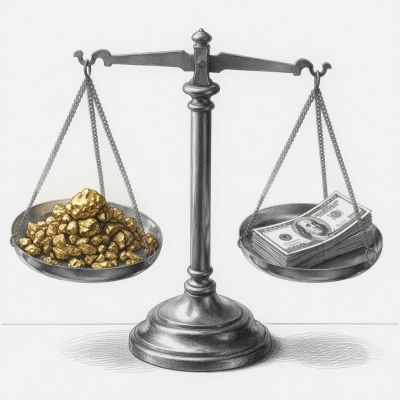
Niels Winthur, born into a Danish family in 1825, married a Swedish beauty, moved to Montana in 1863 during the gold rush there, and discovered a deep vein of gold in a far-reaching cave-like tunnel near Helena, MT.
The American Civil War was raging on, and he wanted to escape the carnage to find a better home for his family. Niels and his 13-year-old son, Johann, worked the mine together, and Niels became one of the wealthiest immigrants in the Northwest. When Johann took over the operation of the mine, he decided to begin the process of converting the gold into Montana land acquisition. Johann’s son Christian continued to work the inexhaustible mine, stashing the gold away because he saw a war coming, WW I. In 1900 his son Matias was born in Helena, MT, but they moved to Boston in 1920 so that Christian’s wife could be near her well established Boston family. They made a good life until the Great Depression in 1929, four years after Mathias’ daughter Julia was born. Knowing where the secret stash of untold amounts of gold that his father Christian hit away, Matthias moved his family back to Helena, MT in 1930. It was there that Mathias discovered that his grandfather Johann held the deeds to massive amounts of Montana land which his father Christian inherited when Johann passed at 80 years old. Julia was five years old when her great, great grandfather died. Mathias decided that all this vast wealth needed to be controlled and managed in a business-like manner. He hired an investment firm to draft a plan for the Winthur Family Trust, making sure that, for generations to come, their descendants would be well cared for. In 1941, when Pearl Harbor was bombed, Mathias knew that he needed to train 16 year old Julia in the ways of managing the family trust. She grew up fast but was mature beyond her years and took to this task with a passion. She knew this was her destiny.
When the war ended in 1945, and all the boys and girls were coming home at last, Larmon Danes had settled down in Seattle, WA to be near his family for Christmas 1947. He was invited to a New Year's Eve party. Where he met Julia on vacation from college and soon to graduate with a master’s in economics. Julia was used to would-be suitors and ignored Larmon's efforts to woo her. He was head over heels in love with her and took this challenge to heart, determined to change her mind. The more Julia found out about Larmon, a war hero and member of a prominent, wealthy Washington family, his charming personality and handsome, optimistic nature, well, Julia couldn't help but falling in love with Larmon, too. They married at Julia's parents’ home in Helena, and, after a romantic. honeymoon in Tahiti, settled down in Bozeman, MT, where Larmon had joined the Sheriff's Office as a new recruit. Tragedy struck in the summer of 1950 when Matthias, at 50 years old, died of a massive heart attack. Julia knew what was next. She became the new administrator of the Winthur Family Trust at 25 years old. Larma and Julia worked out a plan where they could have quality time together, in spite of their respective career paths, out of their love for each other. Margana was born in 1953 into this wonderful family. Margana was Shelley's mother. Six generations of immensely gifted, visionary people.